Roadside Assistance for Dead Batteries: A Complete Guide
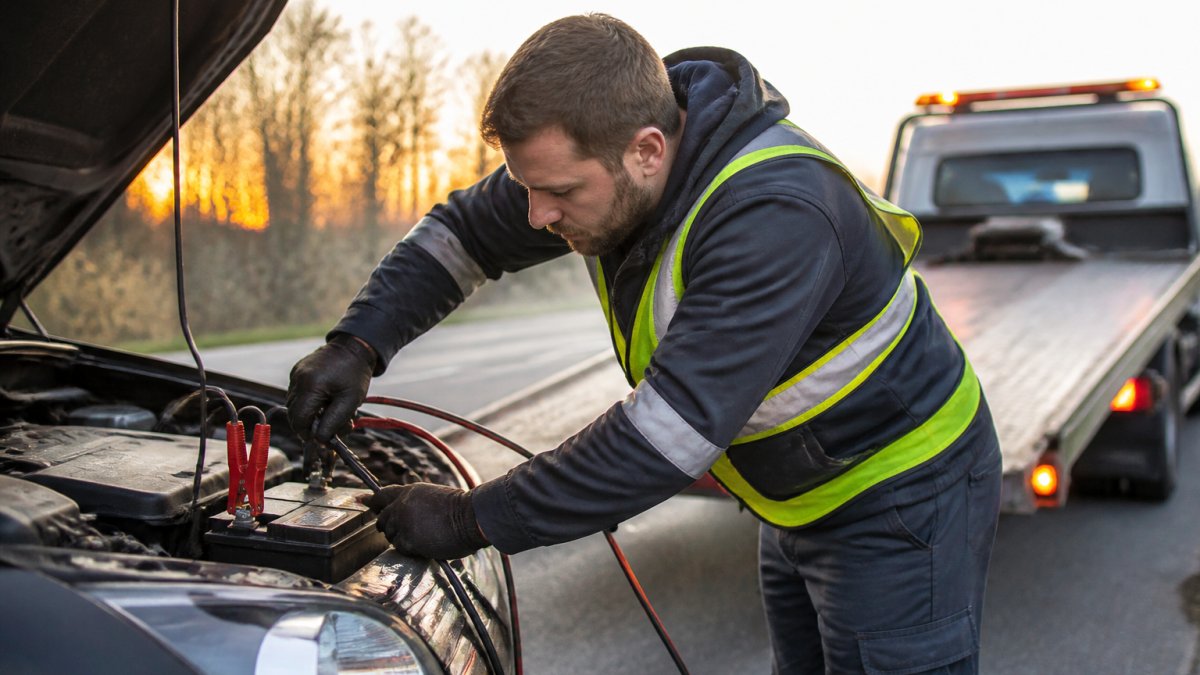
Table of Contents
- What to Do When Your Car Battery Dies
- Roadside Assistance Jump Start: How It Works
- How Long Does a Jump Start Take
- Mobile Car Battery Replacement Service
- When a Jump-Start Doesn't Work
- Coverage, Eligibility, and Costs Explained
- Why Your Battery Died and How to Prevent It
- Frequently Asked Questions
Last Updated: October 16, 2026
What to Do When Your Car Battery Dies
Your car won't start and the dashboard lights are dim or dark. Before you call for roadside assistance for dead batteries, run a few basic checks to save time and help the technician diagnose faster.
Safety checks before requesting assistance
First, get to a safe location. On a busy highway, turn on your hazard lights and move to the shoulder as far from traffic as possible. If you can't move safely, stay inside with your seatbelt on and wait for help.
Next, check for lights left on (headlights, dome, trunk) and turn off anything running. Try the ignition once more, but don't crank repeatedly, that drains the battery further.
Open the hood and inspect the battery. Look for corrosion around the terminals (white, blue, or greenish crusty buildup) and check that both cable connections are tight. Tighten loose cables by hand if comfortable, but never touch corroded terminals with bare hands.
If the terminals look corroded or you're unsure, stop. Don't jump-start the vehicle yourself, call for professional roadside assistance.
Information to have ready when you call
When you contact a provider, have these details ready:
- Your vehicle's year, make, and model
- Your current location (address, highway exit, or nearby landmarks)
- Whether the engine cranks but won't start, or if there's no sound at all when you turn the key
- Whether you see any warning lights or hear any clicking sounds
- If you know what might have caused the battery to die (left lights on, old battery, cold weather)
- Your membership number or account information if you have an existing roadside plan
With this ready, the technician arrives prepared with the right equipment and a realistic timeframe.
Roadside Assistance Jump Start: How It Works
A roadside assistance jump start is the most common solution for a dead battery. The technician arrives with a portable jump starter or uses their own vehicle and jumper cables.
Jump-start safety and vehicle-specific precautions
Before connecting anything, the technician will ask you to stay outside the vehicle. Precautions vary by vehicle type.
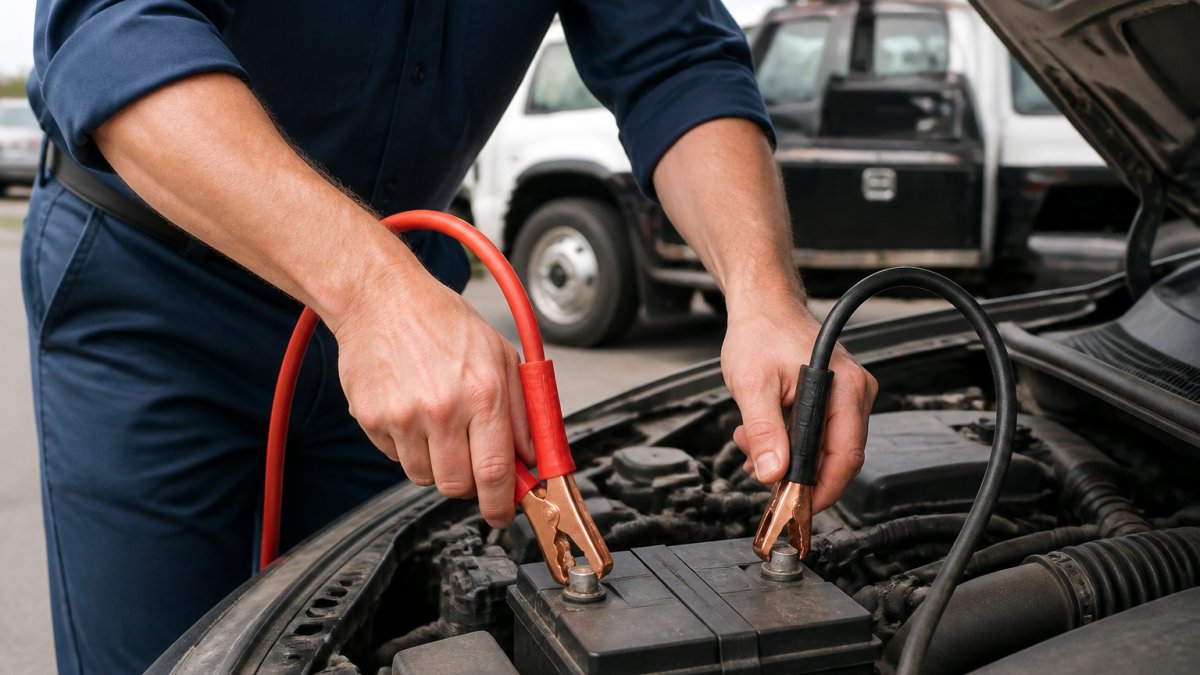
For standard gasoline vehicles, the technician connects the positive (red) cable to your dead battery's positive terminal, then to the jump starter or helper vehicle's positive terminal.
If you drive a hybrid or electric vehicle, tell the technician immediately. These have different electrical systems, and some hybrids should not be jump-started at all, they need to be towed to a service center.
For luxury or newer vehicles, mention any special systems. Some have battery management systems requiring specific jump-starting protocols to avoid damaging sensitive computer components.
What to expect during the service call
On arrival, the technician confirms your vehicle details, inspects the battery and terminals for corrosion or damage, then proceeds with the jump-start if all looks normal.
Once cables are connected, the technician starts the helper vehicle or activates the portable jump starter. Your vehicle should start within seconds to a minute, then run a few minutes to build up a charge.
After your vehicle starts, the technician removes the cables in reverse order: negative from your vehicle, negative from the helper source, positive from the helper source, then positive from your vehicle.
Before leaving, the technician may offer fuel delivery, lockout service, or next-step advice. If your battery is old or has died twice this month, they'll likely recommend testing or replacement.
How Long Does a Jump Start Take
A typical roadside assistance jump start takes 15-30 minutes from the technician's arrival, including inspection, connection, starting, and disconnection.
The jump-start itself takes 2-5 minutes; the rest is assessment and safety checks. If the technician must clean corrosion first, add 5-10 minutes.
Response time is separate from service time. Depending on location and provider availability, a technician might arrive within 30 minutes to an hour in urban areas, or longer in rural locations.
After the jump-start, don't immediately turn off the engine. Drive at least 20-30 minutes so the alternator can fully recharge the battery, and avoid power-hungry accessories like the air conditioner or heated seats.
Mobile Car Battery Replacement Service
Sometimes a jump-start isn't enough. If your battery is old, damaged, or won't hold a charge, you'll need a mobile car battery replacement. Many providers, including Kaygold Towing service, can replace it on the spot without towing.
When replacement is necessary instead of a jump-start
If your battery is more than 3-5 years old, replacement is often better than repeated jump-starts, since older batteries lose their ability to hold a charge.
Signs that you need replacement rather than a jump-start include:
- The battery dies after sitting unused for just a few days
- The vehicle cranks very slowly, even after a jump-start
- You've jump-started the same battery more than once in recent months
- The battery terminals show heavy corrosion or the case is cracked or swollen
- The battery is visibly leaking
- Cold weather consistently kills the battery, even though it worked fine in warm months
A technician can test your battery on-site. If replacement is needed, they can install a new battery right there, often within an hour.
On-site battery testing and diagnosis
Before recommending replacement, a technician tests your battery with a load tester, which measures voltage and cold cranking amps (CCA), the power delivered in cold conditions.
A healthy battery reads around 12.6 volts with the engine off; below 12 volts means it's discharged or failing. The load test shows whether it can hold a charge or is permanently damaged.
The technician also checks your alternator, which charges the battery while the engine runs. If it isn't working properly, a new battery won't solve the problem and you'll be back in the same situation within days.
If the battery tests bad, the technician will discuss your options. Most vehicles need specific voltage and CCA ratings, and the technician ensures the replacement matches your vehicle and is installed with proper connections.
When a Jump-Start Doesn't Work
Sometimes the technician connects the cables, but your vehicle still won't start. That tells you something important about what's actually wrong.
Diagnosing alternator and electrical issues
If your vehicle won't start even after a jump-start, the problem likely isn't the battery, it's something else in the electrical system.
Another possibility is a parasitic drain, something drawing power even when the engine is off, such as a faulty relay, a stuck door switch, or a malfunctioning module. Diagnosing it requires specialized equipment and usually a repair shop.
A bad starter motor can also prevent the engine from cranking. You'll hear a clicking sound when you turn the key, but the engine won't turn over, and jump-starting won't fix it.
If the vehicle has no electrical power at all, no dashboard lights, no interior lights, no sound when you turn the key, the problem might be a blown main fuse or a corroded battery cable.
Towing to a repair shop or service center
When a jump-start doesn't work, towing to a repair shop is the next step. The vehicle needs diagnostic equipment only a full-service garage has, where a scanner reads fault codes from the computer to pinpoint the problem.
Towing is also necessary if the alternator is dead, the starter is broken, or there's major electrical damage, since these require parts and tools available only at a repair facility.
When arranging a tow, tell the provider a jump-start was already attempted and didn't work.
If your roadside assistance plan includes towing, the tow to a repair shop is usually covered up to a certain distance (often 5-10 miles). Beyond that, you may pay out-of-pocket. Understanding your coverage limits beforehand prevents surprises.
Coverage, Eligibility, and Costs Explained
Roadside assistance plans vary widely in coverage and cost. Understanding the details helps you choose the right plan and know what to expect.
What roadside assistance plans typically cover
Most roadside assistance plans cover jump-starts, battery testing, and towing to a repair shop. Many also include lockout service, fuel delivery, and minor repairs like changing a flat tire.
Coverage limits matter. A plan might cover 5 miles of towing free, then charge per mile, while another includes 100 miles per incident. Jump-start service is usually unlimited during a single service call.
Some plans cover only vehicles you own; others extend to rentals or borrowed vehicles. If you drive different vehicles often, check what your plan covers.
Response time varies by plan and location. Urban areas typically see faster response times (30-60 minutes) than rural areas (1-2 hours or longer). At Kaygold Towing service, we're an owner-operated business: when you call, you speak directly with the technician who will help you.
Out-of-pocket costs and service limits
Without a roadside assistance plan, you'll pay out-of-pocket. Jump-start costs vary but typically include a baseline service fee plus travel charges.
Towing is usually the largest expense. Basic towing to a nearby shop might cost a flat rate, while longer-distance tows are often charged per mile, and costs add up quickly if you're towed far from home.
Some repair shops charge diagnostic fees before starting work, separate from the repair cost and often not covered by your roadside plan. Ask about these upfront.
If you have comprehensive auto insurance, check your policy. Some plans include roadside assistance coverage at no extra cost, which can save you money in an emergency.
Why Your Battery Died and How to Prevent It
Understanding why your battery died helps you prevent it from happening again. Most dead batteries fall into a few categories.
The most common cause is leaving lights on (headlights, interior, or trunk) while the engine is off. A single night can completely drain a battery.
Cold weather is another major culprit. Batteries lose power in cold temperatures, and if yours is already weak or aging, winter can push it over the edge.
An aging battery is the third major cause. Batteries typically last 3-5 years and lose their ability to hold a charge as they age (How to Make Your Car Battery Last Longer).
Other causes include a faulty alternator, a parasitic drain from a malfunctioning component, or corroded terminals preventing proper connection. A professional inspection can identify these.
To prevent dead batteries:
- Check your battery age and replace it before it fails
- Keep battery terminals clean and free of corrosion
- Make sure lights turn off automatically when you close the door
- Have your alternator tested if the battery keeps dying
- In winter, park in a garage if possible to keep the battery warmer
- Avoid leaving accessories running when the engine is off
A little preventive maintenance saves you from being stranded and needing emergency roadside assistance.
When your car battery dies, roadside assistance for dead batteries is your fastest solution. A jump-start takes minutes and costs far less than a tow.
Frequently Asked Questions
Can roadside assistance help with a dead battery?
Yes. Roadside assistance providers offer battery jump-starts and on-site testing. A technician can arrive at your location and either jump-start your vehicle to get you back on the road or diagnose whether you need a replacement. If the battery is beyond repair or the underlying issue is electrical, they can tow you to a repair shop or service center.
How long does a jump start take once roadside assistance arrives?
A typical jump-start takes 15 to 30 minutes from the time the technician arrives. This includes safety checks, connecting the jumper cables, allowing the vehicle to charge, and testing whether it starts. If your vehicle doesn't respond to a jump-start, the technician will perform on-site battery testing to determine whether replacement or towing is necessary.
What should I do when my car battery dies and no one is around?
Turn off all electrical components (lights, radio, climate control) to preserve battery power. Stay in your vehicle with hazard lights on. Call roadside assistance immediately and provide your exact location, vehicle details, and whether the engine cranks or makes no sound at all. Stay safe inside your vehicle while waiting, and keep your phone charged.
Is mobile car battery replacement better than a jump-start?
A jump-start is faster and less expensive if your battery is still functional. A technician can test your battery on-site to determine which option makes sense. If the battery is old (3+ years) or shows signs of failure, replacement prevents future breakdowns.