Is My Car Safe for Flatbed Towing?
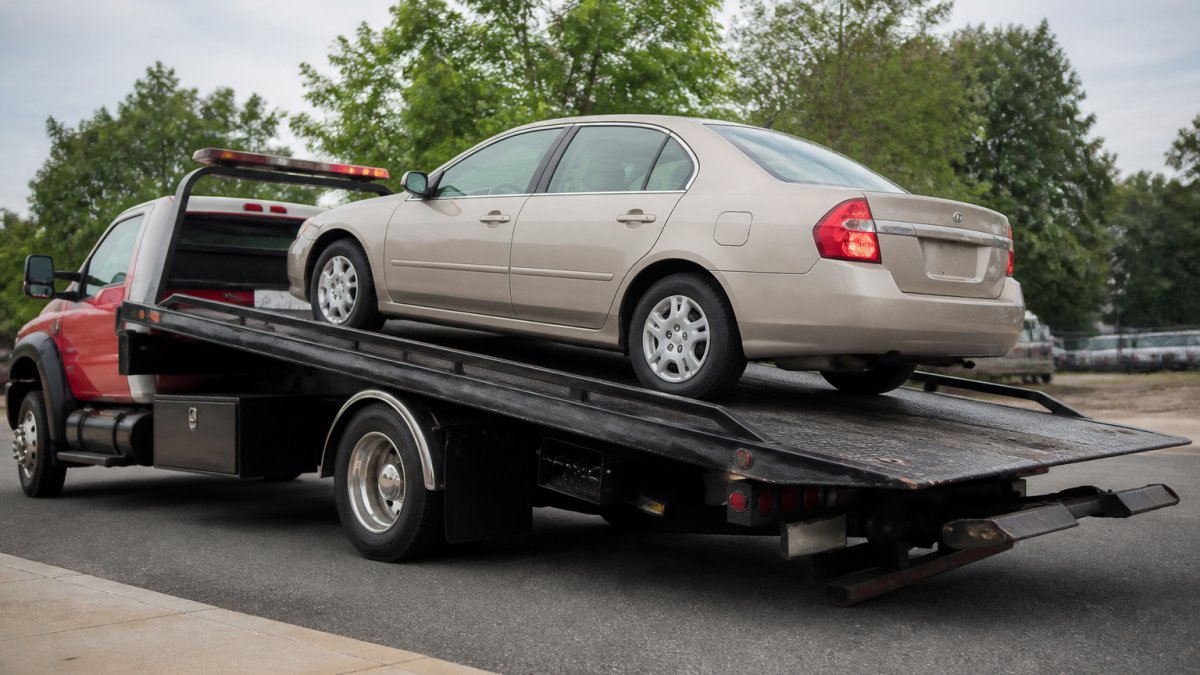
Table of Contents
- What Makes a Car Safe for Flatbed Towing
- Flatbed vs Wheel-Lift Towing: Which Method Protects Your Vehicle
- How to Tow a Car on a Flatbed Safely
- Flatbed Towing for Low Clearance Cars: Special Considerations
- Flatbed Towing Safety Checklist Before Transport
- Vehicle Types That Require Flatbed Transport
- What You Should Tell Your Tow Operator
- Frequently Asked Questions
Last Updated: October 9, 2026
What Makes a Car Safe for Flatbed Towing
When your vehicle breaks down, the towing method matters.
Is my car safe for flatbed towing? It depends on your vehicle's design, weight, ground clearance, and condition.
At Kaygold Towing service, we assess every vehicle before transport and recommend the safest method.
Key safety factors include suspension geometry, weight limits, and condition, a lowered luxury sedan needs different handling than a standard SUV.
Flatbed vs Wheel-Lift Towing: Which Method Protects Your Vehicle
Two main towing methods exist: flatbed and wheel-lift. Choosing the wrong one can cause new damage.
Wheel-lift towing lifts either the front or rear wheels while the other pair stays on the road.
Flatbed towing lifts the entire vehicle onto a flat platform, all four wheels off the ground, supported evenly across its frame with no stress on suspension or steering.
When is flatbed safer? Use flatbed transport for:
- Vehicles with lowered suspensions or custom modifications
- All-wheel-drive and four-wheel-drive vehicles (wheel-lift can damage transfer cases)
- Luxury and sports cars with low ground clearance
Wheel-lift works for standard sedans and trucks in good condition on short tows. If there's any doubt, flatbed is safer. Kaygold Towing service recommends flatbed for specialty and damaged cars because the protection outweighs the cost difference.
How to Tow a Car on a Flatbed Safely
Flatbed towing requires attention to positioning, securing, and monitoring.
Vehicle Positioning and Loading
Your car should sit centered on the flatbed, its center of gravity over the truck bed's center line.
Drive slowly up the ramp in a straight line, avoiding turns or stops mid-ramp. If the car won't start, winch it up slowly.
Once on the bed, position the vehicle:
- Leave equal space on both sides
- Keep the car away from the edges
- Position heavier components (engine) toward the truck's center
For low-clearance vehicles, approach angle matters, a steep angle risks scraping the bumper or undercarriage. Kaygold Towing service uses low-clearance ramps and positions the truck to minimize it.
Securing Wheels and Tie-Down Points
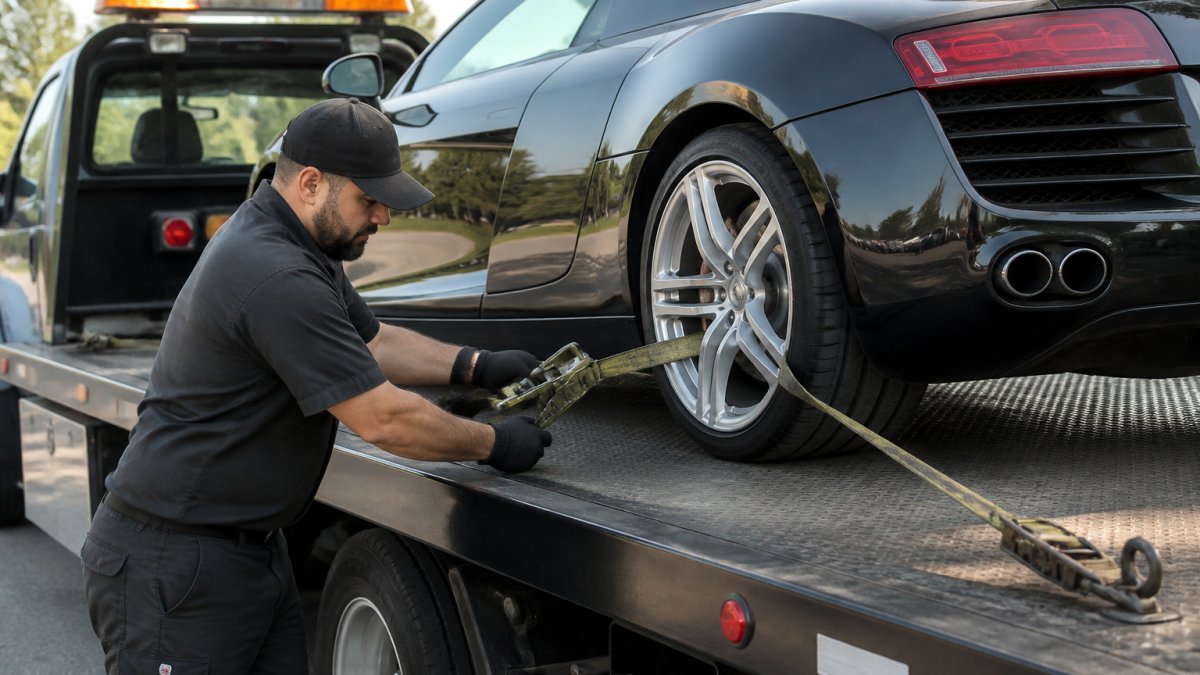
Securing your vehicle prevents movement during transport. Use wheel straps, which wrap around the tire, or frame tie-downs at designated frame points.
Wheel straps work for most vehicles.
Frame tie-downs connect to reinforced chassis points, though not all vehicles have accessible ones, check your owner's manual.
Use at least four attachment points:
- Two at the front
- Two at the rear
- All four wheels should be secured if using wheel straps
Tighten in a crisscross pattern to distribute tension evenly, and check tightness before transport and at stops.
Flatbed Towing for Low Clearance Cars: Special Considerations
Low-clearance vehicles need extra attention. Lowered sports cars, luxury sedans, and custom vehicles have minimal ground clearance, and loading is where most damage happens. With the right ramp geometry and technique, almost any street-legal car can be loaded without contact.
The Three Angles That Decide Whether You Scrape
Three measurements govern whether a car clears a ramp or a breakover point:
- Approach angle, the maximum angle the front of the car can climb before the front bumper, splitter, or chin spoiler contacts the ramp surface. It is set by front overhang length and front ride height.
- Breakover angle, the maximum angle the car can straddle before the underbody (floor pan, exhaust, subframe) contacts the ground or the crest of the ramp. It is set by wheelbase and ground clearance at the midpoint.
- Departure angle, the maximum angle the rear can descend before the rear bumper, diffuser, or exhaust tips contact. It is set by rear overhang and rear ride height.
A car scrapes when the ramp's transition angle exceeds any of these. The fix is to reduce the effective angle, not drive faster.
How to Reduce the Effective Ramp Angle
A flatbed deck sits several feet off the ground, making the ramp the steepest part of the load. Operators reduce the angle by:
- Tilt the bed further. Most hydraulic flatbeds tilt past horizontal at the rear, which flattens the ramp-to-deck transition and lowers the approach angle at the ramp foot.
- Use longer ramps. A longer ramp spreads the same rise over more run, which directly reduces the angle. Many operators carry a second set of extended ramps specifically for lowered cars.
- Add transition boards. A short, shallow board placed at the ramp foot softens the first contact point and bridges the gap between pavement and ramp.
Winching vs. Driving On
Driving a low car up a ramp gives fine speed control, but the suspension compresses under load, lowering ride height at the worst moment. Winching is often safer for very low or stiff cars:
- The car rolls on its own wheels at a constant, slow speed with no throttle input.
- The operator can stop instantly if any part of the car approaches the ramp surface.
- The suspension stays closer to static ride height, preserving clearance.
When winching, pull from a designated tow hook or shipping tie-down point, never a control arm, brake line, or plastic bumper cover. Pull slowly and watch the front lip, rocker panels, and exhaust the whole way up, with a spotter at the ramp foot calling out clearance.
Protecting the Underbody and Battery Packs
Once the car is on the deck, straps, chains, and J-hooks must never contact the underbody, fuel lines, brake lines, or, on EVs and hybrids, the high-voltage battery pack or its cooling lines. A scrape that nicks a battery enclosure can turn a routine tow into a safety incident, so use wheel straps or over-tire baskets on EVs and hybrids.
Clearance After Loading
A car on a flatbed sits higher than on its own wheels, and the deck adds height. Before pulling out, confirm total height against low structures on the route, drive-throughs, garage entrances, low branches, older underpasses. If a clearance is posted, measure or ask rather than guess. Rerouting is cheap; roof repair is not.
What the Owner Should Confirm Before Loading
- Tell the operator the car is lowered, bagged, or has a body kit, before the truck rolls.
- Confirm the operator has extended ramps or transition boards if the car is very low.
- Point out the factory tow hook location or shipping tie-down slots.
Flatbed Towing Safety Checklist Before Transport
Most flatbed checklists focus on the operator. This one covers what you, the owner, should do before the truck arrives, during loading, and after securing, the part you control, and where most avoidable damage originates.
Before the Truck Arrives
- Clear the vehicle. Remove loose items from the cabin, trunk, and bed, anything that can become a projectile or walk away. If towed from a shop or impound, photograph contents first.
- Document existing damage. Photograph all four corners, the roof, the wheels, and the odometer. Timestamped photos protect you and the operator.
- Note the fuel or charge level. Most operators prefer under a quarter tank to reduce weight and fire risk. For EVs, note the state of charge, a full pack is heavier and, if damaged, more hazardous.
Drivetrain and Vehicle Prep
- Transmission. For automatics, follow the operator's direction on Park or Neutral. For manuals, leave it in gear with the parking brake off once on the deck.
- Parking brake. Release it before loading unless the car is non-operational and the operator needs it set for winching, left engaged during a long tow, it can overheat the rear brakes.
- Steering lock. If the car has a mechanical steering lock, the key or fob must be available so the wheels can be straightened on the deck. Tell the operator if it isn't.
During Loading and Securing
- Watch the load. Stay where you can see the car go up the ramp. If anything looks like it will contact, say so before it moves further.
- Confirm the tie-down method. Ask whether the operator uses wheel straps, over-tire baskets, or frame hooks. On low cars and EVs, straps or baskets are preferred; under-body hooks must not touch brake lines, fuel lines, or battery enclosures.
- Count the attachment points. A properly secured car has at least four, typically one per wheel or two front and two rear, with straps crossing diagonally so it cannot shift side to side.
After the Car Is Secured
- Walk around the loaded vehicle. It should sit level, centered, and clear of the deck edges, with no strap pinched, twisted, or rubbing a brake or fuel line.
- Confirm the straps are snug, not crushing. Over-tightened straps can bend wheels, crush sidewalls, or pull suspension out of alignment. Snug and even is the goal.
- Get the paperwork. Ask for a receipt or bill of lading listing pickup and drop-off addresses, the VIN or plate, the date and time, and the agreed price. Keep a copy.
Vehicle Types That Require Flatbed Transport
Certain vehicles should always use flatbed towing. Others can use wheel-lift but benefit from flatbed protection.
Must use flatbed:
- All-wheel-drive vehicles (AWD damages transfer case on wheel-lift)
- Four-wheel-drive vehicles (4WD has same transfer case risk)
- Lowered or custom-suspension vehicles
Should use flatbed:
- Luxury vehicles with low ground clearance
- Sports cars and performance vehicles
- Vehicles with expensive wheels or suspension
Can use wheel-lift:
- Standard sedans in good condition
- Basic trucks without modifications
- Vehicles with normal ground clearance
When in doubt, choose flatbed. The cost difference is minimal compared to potential suspension or drivetrain damage, one transfer case repair exceeds the cost of flatbed transport.
What You Should Tell Your Tow Operator
When you call for flatbed towing, provide specifics so the operator arrives with the right equipment.
Tell your operator:
- Vehicle make, model, and year: This determines weight and dimensions.
- Vehicle condition: Is it running? Does it have damage? Is it stuck?
- Ground clearance: Mention if it's lowered or has custom suspension.
Describe any damage, whether it's stuck in mud or snow, and whether it won't start. These details help the operator choose the right approach and equipment.
Kaygold Towing service asks these questions when you call.
Getting your car to safety shouldn't mean risking more damage.
Frequently Asked Questions
How do I know if my car is safe for flatbed towing?
Check your vehicle's weight against the flatbed truck's payload capacity, inspect ground clearance to ensure it won't drag during loading, verify that the vehicle can be safely secured with tie-down straps at proper attachment points, and confirm the car is mechanically sound or properly prepared if non-running. Low-clearance vehicles, all-wheel drive cars, and damaged or inoperable vehicles are often safer on a flatbed than with wheel-lift methods. Review the safety checklist before pickup to catch any issues early.
Is flatbed towing safer than wheel-lift towing for my vehicle?
Flatbed towing is safer for most vehicles because all four wheels remain off the ground, eliminating underbody damage risk and preventing stress on the suspension. Wheel-lift towing can damage the front bumper, suspension, and undercarriage, especially on lowered cars, all-wheel drive vehicles, or cars with low approach angles. Flatbed transport is the preferred method for specialty vehicles, damaged cars, and any vehicle where ground clearance or underbody protection is a concern.
Can a low-clearance car be loaded onto a flatbed safely?
Yes, but requires careful planning. Lowered sports cars, luxury vehicles, and modified cars need a gradual loading ramp angle to prevent the front bumper or undercarriage from scraping. Communicate your vehicle's exact ground clearance to the tow operator before pickup. The operator may use a winching method or shallow ramp angle to load the car safely. Always inspect the vehicle after loading to confirm no damage occurred during the process.
What should I tell my tow operator before my car is loaded?
Provide accurate information about ground clearance, suspension modifications, damage location, whether the vehicle is running or non-running, any mechanical issues affecting drivability, and whether it's an all-wheel drive or specialty vehicle. Mention if the car is lowered, has aftermarket parts, or is electrically powered. Point out any existing damage so it's not attributed to the tow. Clear communication prevents delays, protects your vehicle, and ensures the operator brings the right equipment and method for safe transport.