How to Avoid Long Tow Wait Times: A Practical Guide

Table of Contents
- Why Tow Wait Times Matter and What You Can Control
- Common Reasons for Towing Delays and How to Prevent Them
- Step 1: Provide Clear Location Details to Your Dispatcher
- Step 2: Know What to Tell a Tow Truck Dispatcher
- How Long Does It Take for a Tow Truck to Arrive
- How to Stay Safe While Waiting for a Tow Truck
- What to Do If Your Tow Truck Is Significantly Delayed
- Use Roadside Assistance Apps and Location Sharing
- Frequently Asked Questions
Last Updated: October 21, 2026
Why Tow Wait Times Matter and What You Can Control
When your vehicle breaks down, every minute feels longer. The real cost goes beyond frustration: you're stuck in an unsafe location, your schedule falls apart, and one breakdown can cascade into hours of lost productivity for a small delivery fleet.
Here's what most drivers don't realize: how to avoid long tow wait times isn't about luck. It's about understanding what causes delays, then taking specific actions that reduce them.
At Kaygold Towing service, we handle emergency breakdowns across the Miami Valley daily. Drivers who give precise location details, know what dispatchers need, and stay reachable get faster response times; vague directions and disappearing into your vehicle waste critical minutes.
Most delays are preventable, and this guide walks you through each factor you control.
Common Reasons for Towing Delays and How to Prevent Them
Distance from the tow service: If you're far from the nearest available truck, you'll wait longer. Calling a local provider helps.
Dispatcher accuracy: A dispatcher who misunderstands your location or vehicle details sends the truck to the wrong place, adding 15-30 minutes. "Near the mall" instead of "mile marker 47 on I-75 northbound, right shoulder" causes real delays.
Vehicle accessibility: If your car is wedged against a guardrail or stuck in mud, the truck needs extra time to position and attach. Winch-outs take longer than standard tows.
Weather and traffic: Ice, rain, or heavy traffic slows the truck, and bad weather means more breakdowns, overwhelming dispatch centers.
Dispatch center bottlenecks: Large dispatch centers route calls through multiple people; owner-operated services answer directly.
Your availability: If the dispatcher can't reach you, they can't confirm your location or provide an updated ETA, and the truck may circle or delay.
The most controllable factor is your communication.
Step 1: Provide Clear Location Details to Your Dispatcher
This is the single most important action to avoid long tow wait times.
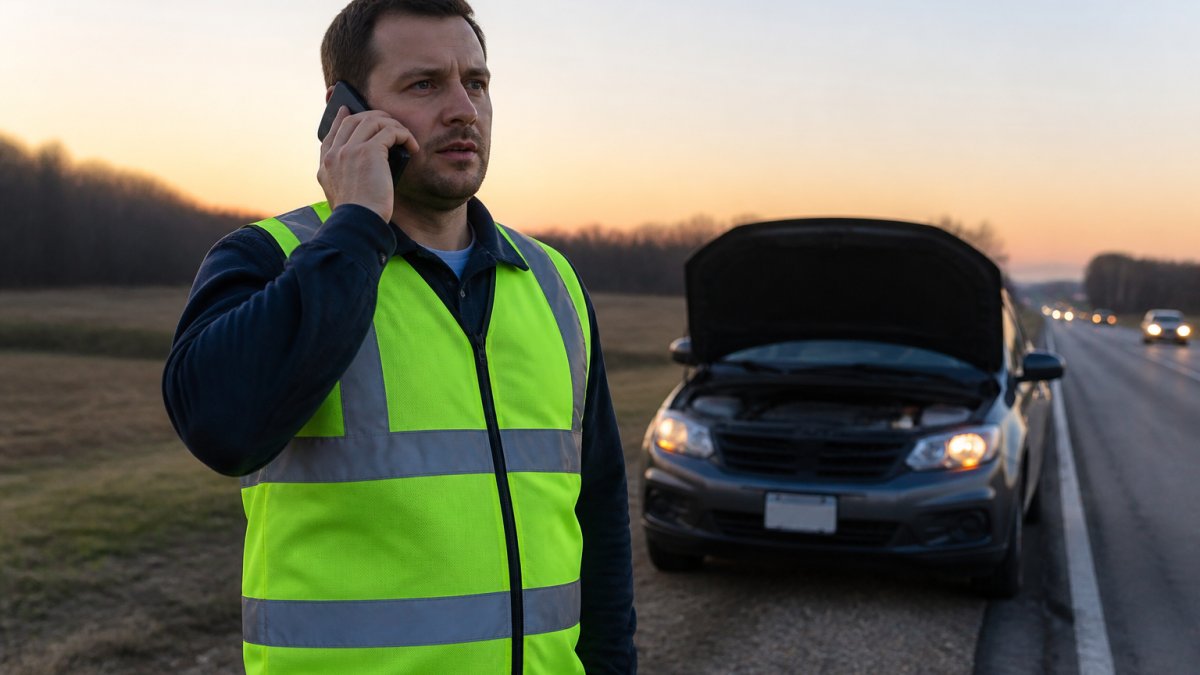
When you call for roadside assistance, have these details ready:
Highway or road name: Don't say "I'm on the interstate." Say "I-75 northbound" or "US Route 35 southbound."
Mile marker or intersection: Mile markers are printed on highway signs every mile, use them. On local roads, give the nearest intersection or business name.
Direction and lane: Right shoulder, left shoulder, or still in a traffic lane? Which direction are you facing?
Vehicle description: Color, make, model, and license plate, so the driver spots you immediately.
Hazard lights status: Tell the dispatcher your hazard lights are on, confirming you're visible.
Your phone number: Make sure the dispatcher has the correct number and your phone will stay on.
Open your phone's maps app, find your exact location, and note the mile marker and road name. This takes 30 seconds and cuts dispatcher confusion in half.
Step 2: Know What to Tell a Tow Truck Dispatcher
Beyond location, dispatchers need specifics about your vehicle and situation to send the right truck and equipment.
Your vehicle's condition: Is it running or dead? Can you steer it, or is it stuck?
Your membership or account number: If you have roadside assistance through insurance or a membership program, provide it immediately to speed authorization and billing.
Special vehicle needs: If you drive a lowered sports car, luxury vehicle, or have all-wheel drive, mention it. Standard tow trucks can damage some vehicles.
Your location accuracy: Confirm your location twice, say it aloud and have the dispatcher repeat it back, so the driver doesn't go to the wrong place.
Your availability: Tell the dispatcher you'll stay on the line or be outside the vehicle, and flag if your phone battery is low.
Many drivers rush this step, but 90 seconds of clear communication prevents 30 minutes of wasted searching.
How Long Does It Take for a Tow Truck to Arrive
Tow arrival times depend on several real factors. Understanding these helps you set realistic expectations.
Distance: If you're 2 miles from the nearest available truck, expect 8-12 minutes of travel plus 2-3 minutes to dispatch. Urban areas are faster; rural areas take longer.
Dispatch center speed: An owner-operated service like Kaygold Towing service answers immediately and dispatches in seconds. Large dispatch centers route your call through multiple people, adding 5-10 minutes.
Current workload: If the service is handling three other calls, your truck is in queue; rush hour or bad weather extends waits.
Traffic conditions: A tow truck stuck in heavy traffic takes longer to reach you, even if it's close.
Your location accuracy: If the dispatcher sends the truck to the wrong exit or wrong side of the highway, you add 15-30 minutes.
Time of day: Overnight calls may wait longer because fewer trucks are available; business hours are usually faster.
A typical arrival time in urban or suburban areas is 20-40 minutes; in rural areas, expect 45-90 minutes.
How to Stay Safe While Waiting for a Tow Truck
Your safety matters more than your wait time. Follow these steps while you wait.
Turn on your hazard lights. This is your first visibility signal. Do it immediately when you pull over.
Place reflective warning triangles or flares if you have them, 100 feet behind your vehicle to warn oncoming traffic.
Stay away from the roadway. Don't stand between your vehicle and traffic, lean against the vehicle, or sit on the curb near the road.
Keep your phone charged. The dispatcher needs to reach you. If your battery is low, turn off unnecessary apps and dim the screen.
Stay alert. Watch for the tow truck and be ready to wave or signal when it arrives.
In bad weather or at night, stay inside the locked vehicle on a remote road; on a busy highway, get out and away from traffic.
If you feel unsafe, call 911 or local police. Tow drivers are professionals, but trust your instincts.
What to Do If Your Tow Truck Is Significantly Delayed
A delay isn't a problem until it becomes one, the difference is having a process for managing the ETA instead of waiting passively. Most drivers call once, get a time, and sit. That's the biggest mistake after dispatch.
First, define "significantly delayed." Treat a delay as significant when the truck is more than 15-20 minutes past the original ETA, or the dispatcher can't give a new arrival window.
Second, call dispatch, don't text and wait. Ask three questions: (1) Is my request still assigned to a truck? (2) What's the driver's status, en route, on another call, or not yet dispatched? (3) What's the new arrival window?
Fourth, use a decision rule for escalation:
- 0-20 minutes past ETA: Stay put, stay reachable, and check the app for a status update. Traffic and weather routinely add this much.
- 20-45 minutes past ETA: Call dispatch again for a firm new window. If none is available, ask whether another truck or provider can be assigned. Document each call's time.
- 45-90 minutes past ETA with no firm window: Ask directly whether to request a second provider. If you're safe and not in immediate danger, this is usually the point to escalate, through your roadside-assistance program or a second local service. Tell the second provider a request may already be open so they coordinate rather than duplicate.
- Any time you feel unsafe: Stop waiting on the ETA and act on safety first. Move behind a barrier, up an embankment, or inside a nearby open business, or call 911 if you're in a live traffic lane or exposed position. A tow wait is never worth an injury.
Sixth, document everything. Note your first call time, the ETA given, each follow-up and what you were told, and the actual arrival time.
Use Roadside Assistance Apps and Location Sharing
Apps don't shorten a tow by magic. They shorten it by removing the two things that most often add time: a dispatcher who can't find you and a driver who can't reach you.
Step 2: Use the roadside-assistance app your program already provides. If you have coverage through an auto club, insurer, or vehicle manufacturer, check for an app before you break down.
Step 3: Track the request, not just the phone. A quality app shows the truck's status, accepted, en route, arrived, and an updated ETA.
Step 4: Keep the phone reachable and charged. Before you call for a tow: lower screen brightness, close battery-heavy apps, and turn on battery saver. Plug in if you have a cable.
Step 5: Use direct driver contact when offered. Some providers text the driver's number or route the call through the app.
Step 6: Know the limits. Apps depend on a data signal, and breakdowns often happen where it's weak.
FCC consumer guide to 911 and location information
Frequently Asked Questions
Why does it take so long to get a tow truck?
Tow wait times depend on several factors: dispatcher queue volume, traffic conditions affecting the tow truck's route, weather delays, and the distance from the nearest available technician. Dispatch centers that handle multiple trucks often have longer waits because calls are queued. Owner-operated services with direct communication typically respond faster because there's no intermediary queue. Weather, accidents on major routes, and peak hours all extend arrival times. Providing your exact location and vehicle details upfront helps reduce delays caused by miscommunication.
What information should I give the towing dispatcher?
Tell the dispatcher your exact location (street name, mile marker, or intersection), the direction you're facing, whether you're on a highway or local road, your vehicle's make and model, and what's wrong (engine won't start, flat tire, accident damage). Mention if your vehicle is running or disabled, if passengers are with you, and any hazards nearby like guardrails or active traffic lanes. If you have roadside assistance membership, provide that account number immediately. This information prevents callbacks that delay dispatch and ensures the tow truck arrives prepared for your specific situation.
How long should I wait for a tow truck before calling again?
If you received an estimated arrival time (ETA), wait until 15 minutes past that ETA before following up. When you call back, ask for a status update and current ETA rather than requesting a new service. If no ETA was given at all, call after 30 minutes to confirm your service request was logged. Document the time you called, the name of the dispatcher, and the ETA you were given. If the wait extends beyond 60 minutes without communication or a clear reason, escalate by asking for a supervisor or considering an alternative provider.
Can traffic or weather affect how long it takes for a tow truck to arrive?
Yes, both significantly impact arrival times. Heavy traffic on major highways can add 15-45 minutes to a tow truck's route, especially during rush hours. Weather like snow, ice, or heavy rain slows travel and increases the volume of breakdowns, which backs up dispatch queues. Fog or darkness also increases response time because technicians must drive more carefully. Accidents on primary routes force tow trucks to take longer detours. When calling for service during bad weather or peak traffic, ask the dispatcher for a realistic ETA accounting for current conditions rather than an average time, and stay in communication if conditions worsen.
Breakdowns happen. But long waits don't have to. When you're stranded, clear communication, accurate location details, and a responsive tow service make all the difference. Call a local provider who answers directly, stay visible and safe, and use location-sharing tools to reduce delays. The next time your vehicle breaks down, you'll know exactly what to do to avoid long tow wait times and get back on the road faster.